Be yourself; Everyone else is already taken.
— Oscar Wilde.
This is the first post on my new blog. I’m just getting this new blog going, so stay tuned for more. Subscribe below to get notified when I post new updates.
Be yourself; Everyone else is already taken.
— Oscar Wilde.
This is the first post on my new blog. I’m just getting this new blog going, so stay tuned for more. Subscribe below to get notified when I post new updates.
To: University of Denver Writing Department
From: Austin Danelski
Re: Writing Portfolio
Date: 3/10/2020
This quarter’s WRIT 1122 class forced me out of my comfort zone. Coming from a small high school with a weak writing department, I knew very little regarding rhetorical analysis and the argumentative, toulmin, and rogerian models of writing.
Our first discussion post asked us to identify some strengths and weaknesses with our writing process and looking back, my answer couldn’t have been more incorrect. I talked about three of the learning goals we outlined in the syllabus, saying that I felt like my proficiency with basic elements of rhetorical analysis wasn’t my strength, but I did know how to effectively provide evidence and reasoning for my assertions because of the researching methods we learned in high school and I was able to edit and proofread my writing.
Reminiscing on the beginning of the quarter, it is apparent to me that I had no clue what I was doing as far as providing solid evidence and reasoning for my arguments and my editing and proofreading was lacking. Half of this could be due to the fact that I had taken a year off of school, the other half could be that I was not a very skilled writer at the beginning of the quarter and did not have an understanding of ethos, logos, and pathos.
However, after jogging my memory I was able to make leaps and bounds of improvement.
Each writing project I turned in yielded a higher score than the last, a testament to the comprehension of the three learning goals I have outlined above. Even by re-editing writing projects two and three I noticed errors I did not catch weeks ago.
My second writing project I wrote about the proposed Line 3 pipeline in northern Minnesota. Written in the toulmin model and focusing on the environmental and economic benefits the pipeline would bring the state, the paper kept the reader engaged and called for them to take action to make the pipeline a reality.
Upon revisiting the second project I found a few errors and corrected them. I began by adding a few more links to further enforce my ethos and provide the reader with an easy way to find more information regarding the pipeline.
I concluded my editing by further developing my warrant earlier in the push. This section is where I call the reader to action, and by revising this I do so more effectively.
The third writing project I wrote about lack of involvement within the Zeta Beta Tau fraternity. By establishing common ground and then highlighting our attendance numbers and a couple other pressing issues, I effectively outline a problem and show how it is a problem for others as well.
I noticed that to make this paper better, I needed to exclude one paragraph of my original paper that talked about the lack of apparel provided to brothers. This section was confusing and took the reader away from the larger problem at hand. Upon revising, I made the ripple effect more apparent, showing how this problem not only affects us as brothers but DU and our community as a whole as well.
Overall, I learned a great deal about my writing this quarter.
My understanding of rhetorical analysis grew dramatically, allowing me to write in a number of different styles and appeal to different audiences. I learned how to effectively provide evidence and reasoning for my assertions through research, and I learned more than I would have thought about editing and proofreading and how to polish my writing in a way I couldn’t before.
My revision process entails writing a rough draft and then thinking about it for a few days before going back and rewriting each paragraph, keeping the content the same but changing the wording slightly and adding support where needed. I think that this works best for me because it tends to clarify my argument and make it as concise as possible while still providing the reader with valuable information.
As far as this class goes, I found that my revision process drastically changed throughout the quarter based on the style of argument and who the audience was. When revising each paper, I edited sections of the paper that would make my argument stronger to my target audience.
For WP#1, writing to an academic audience required that I do extensive rewriting of each paragraph to add supporting statistics and information to make my ethos stronger. I agreed with Murray when he said, “Now it has to be re-edited, revised, re-read, and re-re-edited, for each piece of writing to the writer is full of potential and alternatives.” I was not satisfied with my first writing project because I felt that there could have been more done in the editing process, concurring with Murray’s belief.
In WP #2, I found that the target audience forced me to edit my paper in a way that I was not as comfortable doing. The largest thing that I changed in the second project was my paragraph length. I had to break up many of my larger paragraphs, which made each sentence more important individually. This then required me to change some wording from academic to something more common, which was a challenge as I felt I was degrading my writing. As Murray says in his article, we have to make information easily digestible for the audience, and that was my main focus when revising the second project.
My revisions of WP #3 followed a little bit of both my strategies for the first two projects. I had to support my evidence a bit more like I had to do in the first project. I added some key elements to support my argument and build my ethos while also sticking to what my audience would be able to digest and build discussion from.
From: Austin Danelski
To: Alec Hurst
RE: Chapter Involvement
2/25/20
Brother President,
When I came to the University of Denver, I had no intention of rushing a fraternity, but after meeting a member of the Zeta Beta Tau fraternity through a mutual friend and hearing the good things they had to say about the organization I felt compelled to show up to a rush event. At that event, I met a group of guys that showed me what a great fraternity they had and were able to take pride in. The high upperclassmen participation at the rush events showed me that even the older guys still came around and enjoyed the brotherhood they were a part of.
It goes without saying that each and every member of our fraternity wants to build the best group of men that we can in our four years here. We want to make sure that we are one of, if not the best, ZBT chapter nationally each year as we have been the past 10 years. We want to do the most we can for the Children’s Miracle Network and donate hundreds if not thousands of hours of our time to our community. We as a chapter strive to be the best we can be, and now is a crucial time for us to look inward and examine what needs to be changed to return us to our former glory.
Since I became an initiated member, pride in our Zeta Beta Tau fraternity has been slipping. Upperclassmen participation has sharply declined; the juniors have been back from their quarter abroad for 8 weeks now and I have only met a small handful of them. Furthermore, seniors are withdrawing from the scene as the pressure mounts for them to figure out their plans for the coming year. Several sophomores living in the chapter house have moved out for a variety of reasons, and there are now 5 unoccupied beds in the house. As a freshman class, 3 of our rush class of 28 have already dropped the fraternity. In the last week, 6 more brothers have mentioned they either plan to drop the fraternity or transfer to a different university. The significance of this number cannot be understated. Our pledge class consisted of 31 at the beginning of the year, and now it looks like just ⅔ of us will make it to our sophomore year in the fraternity. That attrition rate is embarrassingly high and makes our brotherhood look like a disaster.
Though some of these losses are inescapable, the withdrawal of participation of many of the brothers has become increasingly evident this winter quarter. Chapter attendance is at an all-time low. Our former executive board imposed fines on brothers that didn’t make it to our weekly chapter meetings to boost the number of upperclassmen in attendance, a moderately efficient strategy. However, you and your new executive board have decided to erase the policy that forced at least a few people to show up to chapter. We have a chapter of 131 brothers. In the first chapter with our new executive board, we had 28 brothers in attendance. Our chapter meetings are crucial to the success of our brotherhood, as they provide an opportunity for everyone’s voice to be heard and for us to make changes and move forward as a chapter. Without a strong showing at these meetings, we cannot continue to be one of the best chapters of ZBT nationally.
The last shortcoming I will discuss revolves around the lack of apparel provided to members, especially our newly initiated brothers. I rushed in the fall and have yet to receive any ZBT apparel of any kind. We haven’t gotten our pins, rush shirts, semiformal shirts, or hats. Our allocation of funds allows us to make shirts for every event that we have but the lack of drive from those who can design shirts is disappointing. Apparel is a great way to both represent and promote our chapter, and wearing letters certainly boosts brothers’ pride in the decision they made to rush a fraternity.
Getting more brothers involved will indeed cost money. However, by reinstating and increasing the chapter fine policy, we can incentivize more brothers to come and if they choose not to we will generate the income we need to engage more members. I have spoken to many brothers about the lack of apparel, and many of them have expressed that they are more than willing to pay for the shirts if they are produced; we simply need to find someone talented enough to produce high-quality designs for us. As far as the lack of engagement outside of chapter, by hosting more events in off-campus satellite houses, we can grow the brotherhood that we have pledged ourselves to. You and your executive board must listen to the creative ideas brothers have to offer. We have some brilliant minds in our chapter. The ideas are out there and have been expressed time and time again by brothers of all ages, it’s time to start listening to them to make a change.
The lack of participation within ZBT is stagnating the growth of relationships between brothers and the prosperity of the chapter as a whole. I urge you and your executive board to make a few small tweaks that will allow us to stay among the top Zeta Beta Tau chapters in the nation. The lack of pride and dedication brothers have to this brotherhood is shockingly low and swift action must be taken to keep the current members of ZBT in the fraternity and enrolled at the University of Denver.
WRIT 1122 WP #3 Rogerian Argument: Self Evaluation
I found an article from dailykos.com highlighting the issue of gun control and sharing perhaps a different perspective than we have heard from the two sides of the argument thus far. Focusing on the “gun show loophole,” this article suggests that we shouldn’t necessarily stop selling guns, but rather eliminate illegitimate ways of obtaining them. The gun show loophole, better known as the private sales exemption, enables individual collectors and enthusiasts to buy and sell firearms without background checks.
The article analyzes differences between the author’s stance and that of the opposition. They say “Note that banning all firearms or overhauling the Second Amendment is not on the agenda of any mainstream politicians or think tanks. The proposal outlined thus far by the President’s working group consists merely of federal regulations to help better control guns and prevent them from getting in the hands of the wrong people.” Note that the author does not say that gun regulation was necessary, but rather that we should select certain parts of the issue and modify them to find a middle ground. Shown below are a couple screenshots of the article that highlight the key points and Rogerian style of arguing them.


Enbridge Energy’s current Line 3 oil pipeline has been described as an accident waiting to happen by Dan Lipschultz, a former Minnesota Public Utilities Commissioner. To safeguard our environment from this ticking time bomb, the existing pipeline must be replaced.
Enbridge’s Line 3 replacement project was first introduced in 2015, and after years of debate, the matter was eventually approved last summer in a unanimous vote by the Public Utilities Commission (PUC).

The proposed pipeline route shown above would replace the 50 year old corroding pipeline currently transporting oil from Edmonton, Alberta to Superior, Wisconsin. The old pipeline, which began operation in 1968, is currently operating at half capacity (390,000 barrels per day) and poses a major threat to the environment.
Unfortunately, an environmental impact statement from the State Department of Commerce created to determine the effects of spills along the pipeline’s route failed to provide consequences of a possible spill that would harm Lake Superior, forcing the Court of Appeals to reject the plan. The revised plan was approved by the PUC this past week, and Enbridge is expected to start acquiring the necessary permits to construct their pipeline in the coming weeks, but not without obstruction.
Environmental activists continue to push back, arguing that the oil is best left in the ground. They urge that the time is now to make the switch to alternate forms of energy. However, it is important to note that the demand for oil is still high. Without a reliable pipeline to send it through, the oil will be transported by carbon-emitting vehicles that will further pollute the air. Though this pipeline will continue to enable the use of fossil fuels, it will negate any immediate environmental harm.
The existing pipeline has been corroding and cracking, subjecting our lakes and wilderness to harmful pollution, and it will only get worse. Enbridge estimates that the existing pipeline will require 7,000 repairs in the next 15 years if it isn’t replaced. Do we really want to continue running oil through a pipeline at such a great risk? I certainly hope not.
Replacing the pipeline would safeguard the 10,000 lakes of Minnesota from potential oil spills.
It shouldn’t be surprising that a project like this also has massive economic benefits. Enbridge estimates the cost of the Minnesota portion of the project to be $1.5 billion, yielding a $2 billion jump in the economy. Enbridge currently pays over $30 million in taxes, and if the new Line 3 pipeline is built that number will skyrocket, creating impressive economic growth.
The construction of the pipeline will also create thousands of temporary union laborer positions. Over 8,000 jobs will be created for the construction, and over half of them are expected to be local union workers. These positions will collectively be paid more than $325 million.
This proposal generates a huge flow of income for the state and creates union jobs that Minnesotans will fill.
Though it may seem counterintuitive to some, building this new pipeline is in the best interest of both our government and the environment. The existing pipeline poses far more of a threat to the environment than the proposed Line 3 replacement.
Protecting our earth is of paramount importance to Enbridge, and the precautionary measures they are taking with the deactivation of the current pipeline and installation of the new pipeline guarantee no harm to Minnesota’s wilderness.
Though the replacement project seems safe and informed, the environmental activists with Honor the Earth think differently.
They argue that the existing pipeline will simply be abandoned where it lies, a bold and incorrect assumption. Enbridge’s plan for the existing pipeline is well thought out and takes every necessary measure to prevent environmental harm. Enbridge plans to remove and clean all oil from the existing pipeline to minimize the risk it poses to the land, even going as far as to remove some segments of the pipeline where necessary. They will continue to monitor the pipeline for years to come, ensuring that the environment is protected.

Every measure is being taken to ensure the protection of Minnesota while yielding massive economic gain.
Without a new pipeline, oil would have to be transported by road or rail, increasing carbon emissions in a way that is not at all necessary.
The risk of pumping through the old pipeline is growing every day. Environmental activists need to trust the opinion of the PUC and allow this pipeline to be built. The time has come for Minnesotans to take a leap of faith to protect their environment.
The economic and environmental benefits of this proposal are irrefutable; Minnesotans need this pipeline and we need it now.
Intro:
A month and a half is a tremendously long time, especially as a winter break. While some students enjoy the time away from school, others find that the lengthy break shortens their spring break and hinders their chances of landing their preferred summer job. Unfortunately, there is no easy solution to switching the format of our academic calendar to the dismay of some students.
One sentence paragraph:
Moreover, we have just a one-week spring break separating winter and spring quarters, begging the question: Are we mentally prepared to go back to school that soon?
One sentence paragraph:
It is irrefutable that by sacrificing a week or two of our spring break will cause a rise in tuition.
What makes her hook effective?
Her hook is quite effective in grabbing the attention of the reader, as her mention of the impeachment trial is sure to get many people excited to continue reading. When she transitions into “The report last week….” she relates her topic of the oil and gas industry and the outrage surrounding it to the outrage that people were feeling about the impeachment trial. By making people feel something, she has hooked them into her writing.
Identify three specific examples where her diction exhibits “snap and sizzle” by using more colloquial, informal, or slang language.
One example comes when she says it was an honor system among thieves. Another when she says the situation is laughable. Lastly, her closing statement “And if nothing else, it would ease a bit of our collective outrage, maybe even soothe our weary souls … if only for a moment.”
Identify two places where she uses a shorter paragraph for rhetorical effect – to emphasize a key point.
“So, to appreciate how much this has cost Coloradans in services, consider the governor’s 2020-21 budget proposal.” This paragraph is important at the beginning of the emphasis on her main point.
“What else could we have paid for with the oil and gas penalties we can’t collect?” This paragraph is important in that it shows how upset she is over the issue.
Identify two places where she uses an incomplete sentence, a fragment, for rhetorical effect.
“How else to explain it?” and “Surely it would pay for itself almost immediately.”
In her push leading to her turn, what data and grounds does she offer as evidence?
More than 75% of oil and gas operators in the state had not complied, One of the biggest drillers reported producing 46 million barrels of oil and 187 million MCF of natural gas, the state lost $308 million,
Where is her turn, and what’s her argument?
Her turn is introduced when she says “The sad thing is that while $308 million is pocket change for the industry, it means a lot for the state budget.” She then goes on to talk about the state budget and argues that the money lost by fines that weren’t imposed could have completely paid for the state budget and still had more than $19 million left over.
The Environmental Protection Agency (EPA) was founded in 1970 under President Richard Nixon following growing concern for the environment in the 1960s. Frequent oil spills offshore and worsening air pollution in cities sparked Americans’ desire for change (The Origins of EPA). The EPA’s creation followed the first hints of climate change. As the United States became increasingly contaminated with pollutants we decided as a nation that action had to be taken to prevent the deterioration of our environment. President Nixon appointed William Ruckelshaus as the first administrator of the EPA, whose job would be to work side by side with Americans and industries to lessen their impact on the environment. Fast forward nearly 50 years to the election of President Trump and his naming of Andrew Wheeler as the administrator of the EPA. President Trump and the EPA are currently working together to remove EPA policies implemented under the Obama administration with a heavy focus on the coal industry; specifically, the Clean Power Plan and Clean Water Rule (“Wrong Way at EPA: Three Ways the Agency is Failing Us”). The Trump administration debates that the Obama era restrictions on the coal industry were an overreach and unnecessary. These EPA acts were designed to limit the amount of pollution power plants are allowed to emit and what the plants can dispose of in water sources after their use in the plants. The Trump administration and the EPA are working together to unravel these acts intended to prevent climate change to grow the economy and avoid the unemployment of thousands of Americans working in the coal industry. It is evident that Trump and Wheeler are more focused on the prosperity of our nation than the consequences of our carbon emissions, and the EPA’s revisions of former policies directly contradict what they stand for.
Trump and the EPA worked together to kill the Clean Power Plan and issue the Affordable Clean Energy Rule, which aims to give states the power to loosely regulate their coal plant carbon emissions, reviving the coal industry that was slowly dying under the Obama administration. Obama’s Clean Power Plan was a major step towards replacing coal with cleaner energy sources, crucial to reducing the carbon emissions of the United States. The EPA’s decision to overturn Obama’s plan hurts the environment far more than it helps:
Even if coal plants are run more efficiently, the lack of any requirement to adopt the most recent environmental controls means plants are likely to put more greenhouse gases into the atmosphere than they would if the country’s grid simply replaced coal with cleaner fuels like wind and solar. (Puko)
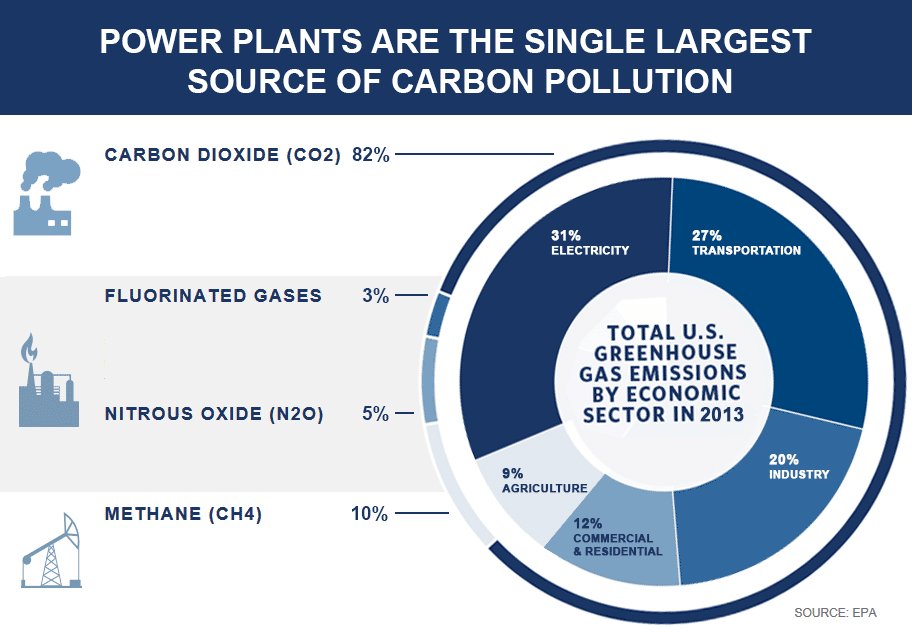
Under the Affordable Clean Energy Rule, coal plants will be run to maximize efficiency, which will prevent the shrinking of the industry and increase the emission of harmful pollutants, protecting the economy instead of the environment. As Greta Thunberg said in her recent article, “Research shows that pollution from burning fossil fuels is the world’s most significant threat to children’s health” (Thunberg et al). This new EPA rule puts the health of our Earth and its entire population at risk, as the United States is one of the leading nations of carbon emissions. Unfortunately, the new EPA deregulations don’t stop with air pollutants.
A) It is without question that Cronon is a gifted and widely recognized scholar and researcher. He attended many prestigious schools, including the University of Wisconsin, Yale University, and Oxford University and his work has yielded him impressive decorations. As the Fredrick Jackson Turner Chair of history, geography, and environmental studies at the University of Wisconsin, Cronon has certainly done his fair share of research and studied the research of others to become increasingly educated on the topic of wilderness. This research has been gathered over many years of work in the field and has led him to a belief that the wilderness must be looked at realistically rather than romantically. He refers to the work of Fredrick Jackson Turner in his paper, who suggested that wilderness became a sanctuary and a place where Americans could go to feel what it meant to be from our nation. Cronon agrees with Turner in that our view of wilderness is polarized and limited to only rural and unpopulated areas. Cronon argues that our perception of wilderness should be inclusive of all environments, both urban and wild. If we recognize that wilderness is all around us no matter where we are, we can “get on with the unending task of struggling to live rightly in the world.”
B) Cronon uses both logos and pathos to support his argument in a few subtle ways. He mentions the difference in perception between wilderness in the wilderness and controlled environments. “We get into trouble only if we see the tree in the garden as wholly artificial and the tree in the wilderness as wholly natural.” Cronon points out that a tree is a tree, no matter where it stands. He takes this point and sends a call to action, urging that we must treat all nature, both urban and rural, as one and the same. We must be aware of our destruction of nature for personal use and note how sustainable the path we are on is. By thinking that wilderness is only in places such as national parks and forests, we turn a blind eye to the destruction of nature outside of these areas. The Earth as a whole is our home, and Cronon urges us to think this to prevent the destruction of the wilderness that we depend on.

 Austin's Blog